Research Lab for
Concrete Utopias
STUDIOS, SEMINARS, EXCURSIONS
Teaching
Studios and seminars at Studio_2, Institut für Gestaltung, where students work as co-researchers on real places, with real partners.
How we teach
Teaching · Principle
Public space is best researched by intervening in it
Teaching combines fieldwork, critical analysis of public space and material experimentation at 1:1 in one continuous process. Several courses of the same department – design, theory, construction – work together on one shared subject, multiplying the levels and formats in which students can take part.
The design project is understood as an instrument of research, not only as a formal result. Students learn to mediate between embodied knowledge – bodily experience, everyday routines of public space – and situated knowledge – positionality, social difference, collective memory – within the design process itself.
#autogestion
Students work in self-organised groups with collective responsibility and rotating roles – design, construction, communication – so that the result is always shared authorship. Reviews are organised horizontally among the students, not only by the teachers, and shared tasks such as documentation, graphic communication and overall models make each project a collective work rather than the selection of one winning proposal.
#différence
Divergent perspectives are deliberately brought into the design process, including a gender perspective and a decolonial perspective that recognise the situated, bodily and everyday knowledge of actors historically excluded from the architectural canon. Plural tools of mediation – models, drawing, collage, montage, augmented and virtual reality – translate narrative, bodily and affective knowledge that does not fit conventional representation.
#utopie
Every project starts from a speculative vision of space, developed through collage, hand drawing or, in a limited way and always preceded by one’s own verbal formulation, artificial intelligence tools. The vision becomes the operative starting point of the project rather than its final horizon, and is then tested in an experimental 1:1 intervention before it is developed into a consolidated, buildable proposal.
Teaching · Formats
Studio, field, workshop, public
Assessment is continuous. Its guiding principle: the documented process – including its disagreements and lessons – weighs at least as much as the final submission.
- Design studio sessions with individual and collective reviews
- Fieldwork and site visits
- Round tables with local actors from administration, culture and civil society
- Small experimental models to test geometries, materials and joints before detail drawings
- Prototyping and 1:1 building workshops, supported experimentally by augmented and virtual reality
- Public feedback sessions on preliminary results
- A final symposium or exhibition, with editorial documentation of the whole process
Teaching · References
This approach sits within a tradition of critical architectural pedagogies: the Bauhaus workshop and its ambivalences, the “University without Professors” in Stuttgart and the UNAM “Autogobierno” in Mexico City, Giancarlo De Carlo’s participatory pedagogy, the Women’s School of Planning and Architecture – and, in practice, raumlabor berlin, Rural Studio, Arquitectos de Cabecera and Momoyo Kaijima’s Architectural Behaviorology, where craft knowledge mediates embodied knowledge on equal terms with academic knowledge.
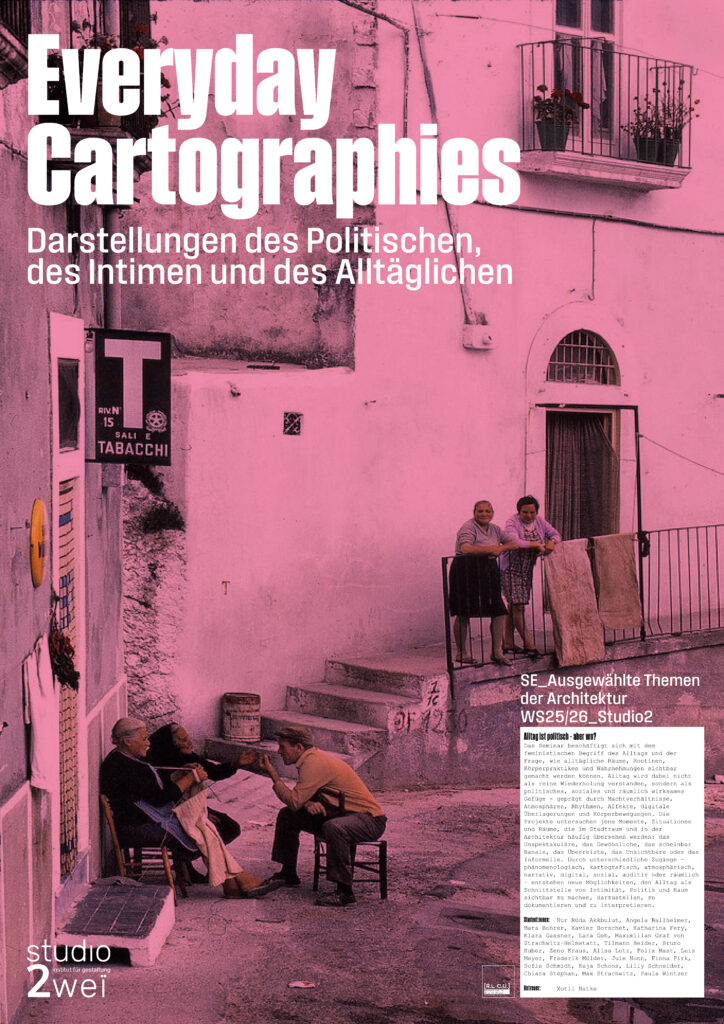
Everyday Cartographies
SE_Ausgewählte Themen der Architektur
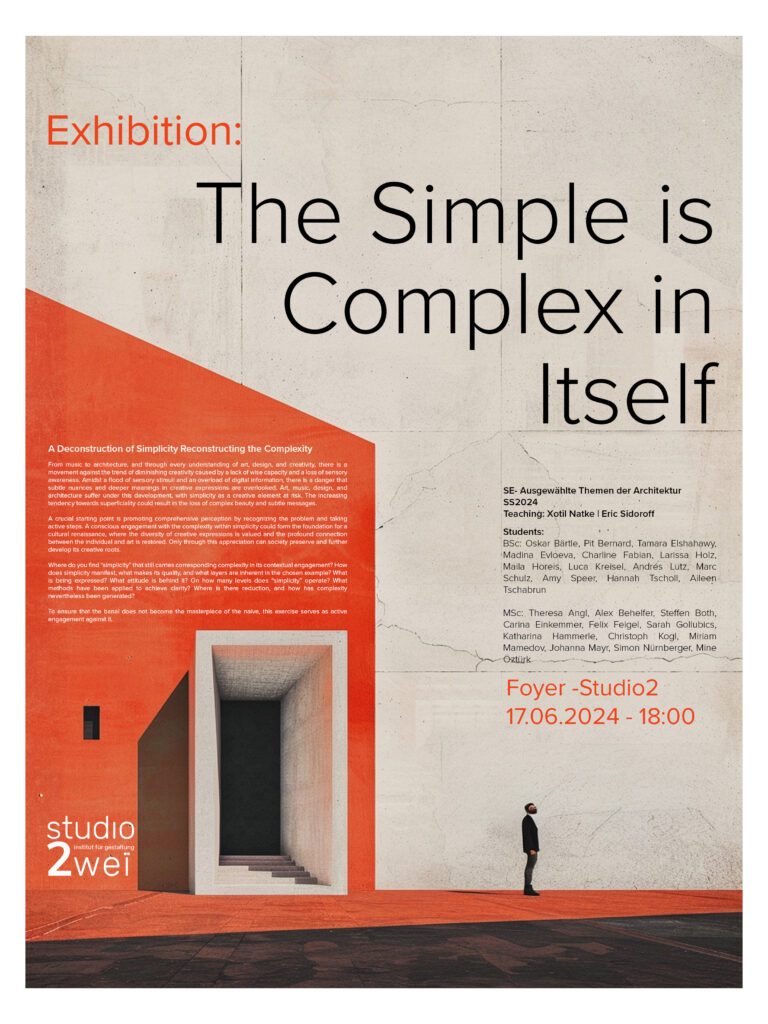
The simple is complex in itself
SE_Ausgewählte Themen der Architektur
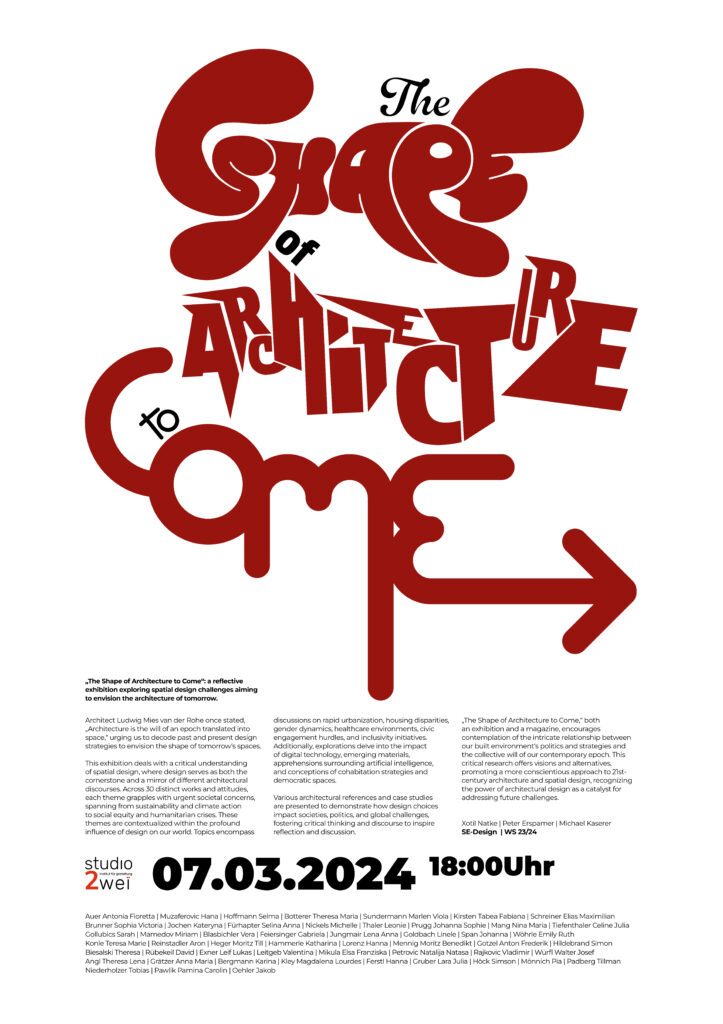
The shape of architecture to come
SE_Design
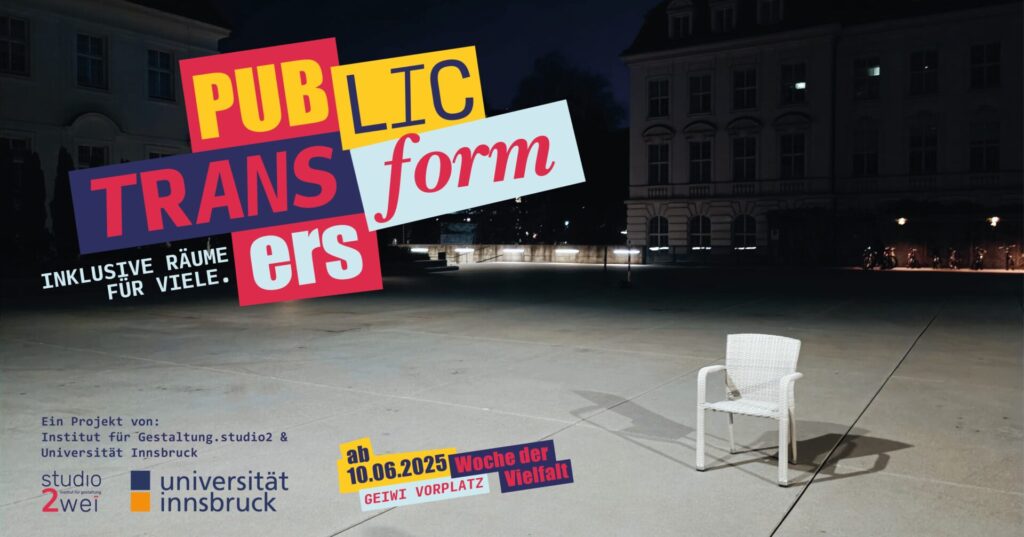
Public transformers
SE_Ausgewählte Themen der Architektur
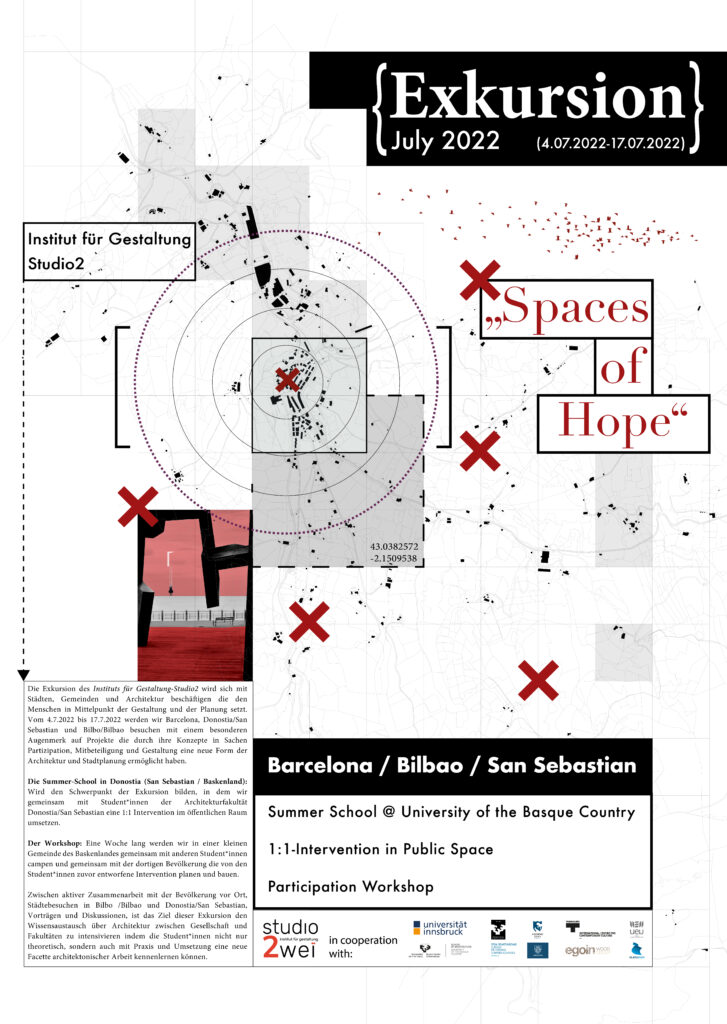
Spaces of hope
EXKURSION: Barcelona & Basque Country
Have a place that needs a concrete utopia?
We work with municipalities, civic groups, cultural institutions, universities and building partners on studios, 1:1 interventions and joint research.
Research Lab for Concrete Utopias
Institut für Gestaltung / Studio_2
Faculty of Architecture, University of Innsbruck
Technik Campus, Technikerstraße 21
6020 Innsbruck, Austria